Rare Queen Anne Lead Cistern with Cherubs 1711
An exquisite rare Queen Anne (1665-1714) Lead Cistern dated 1711.
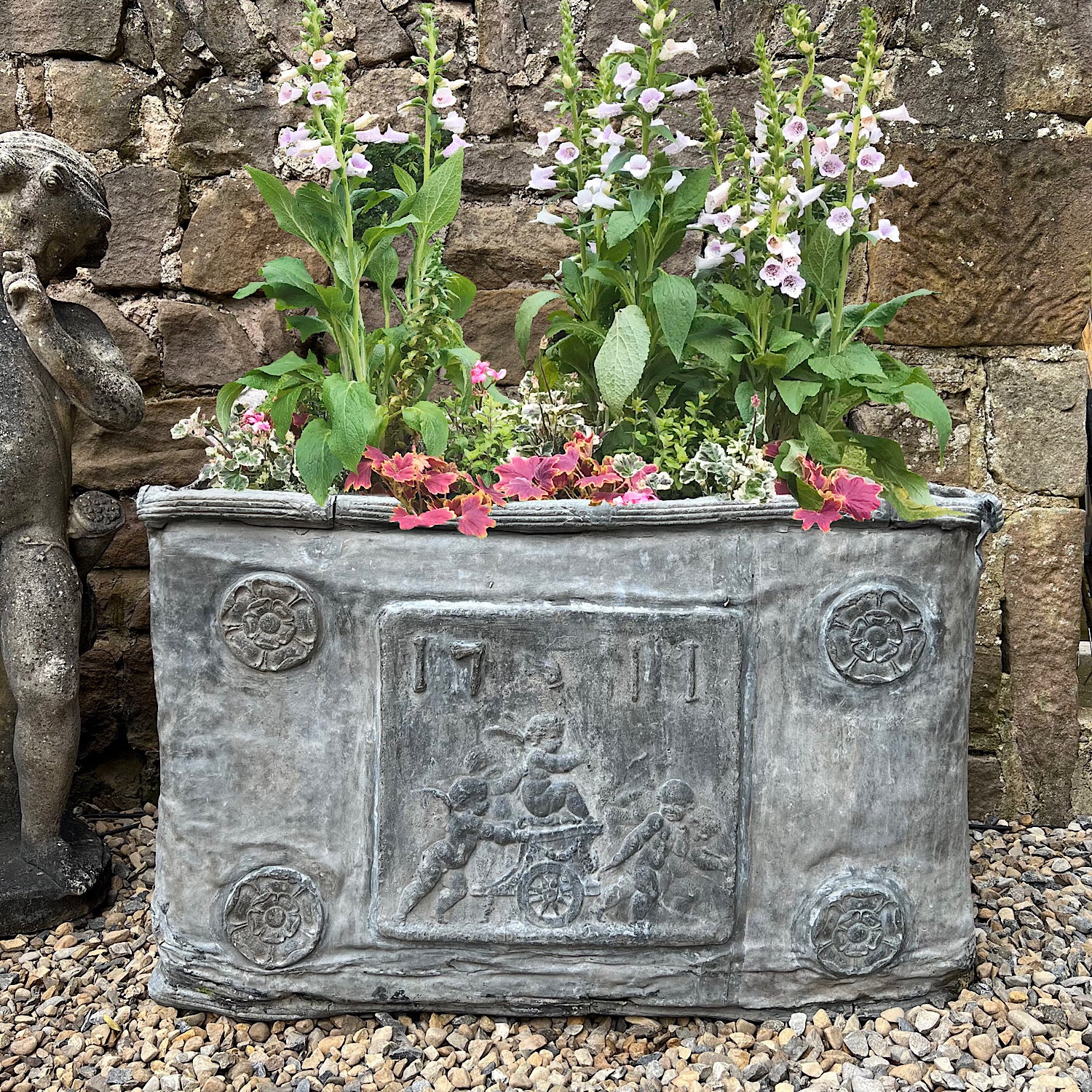
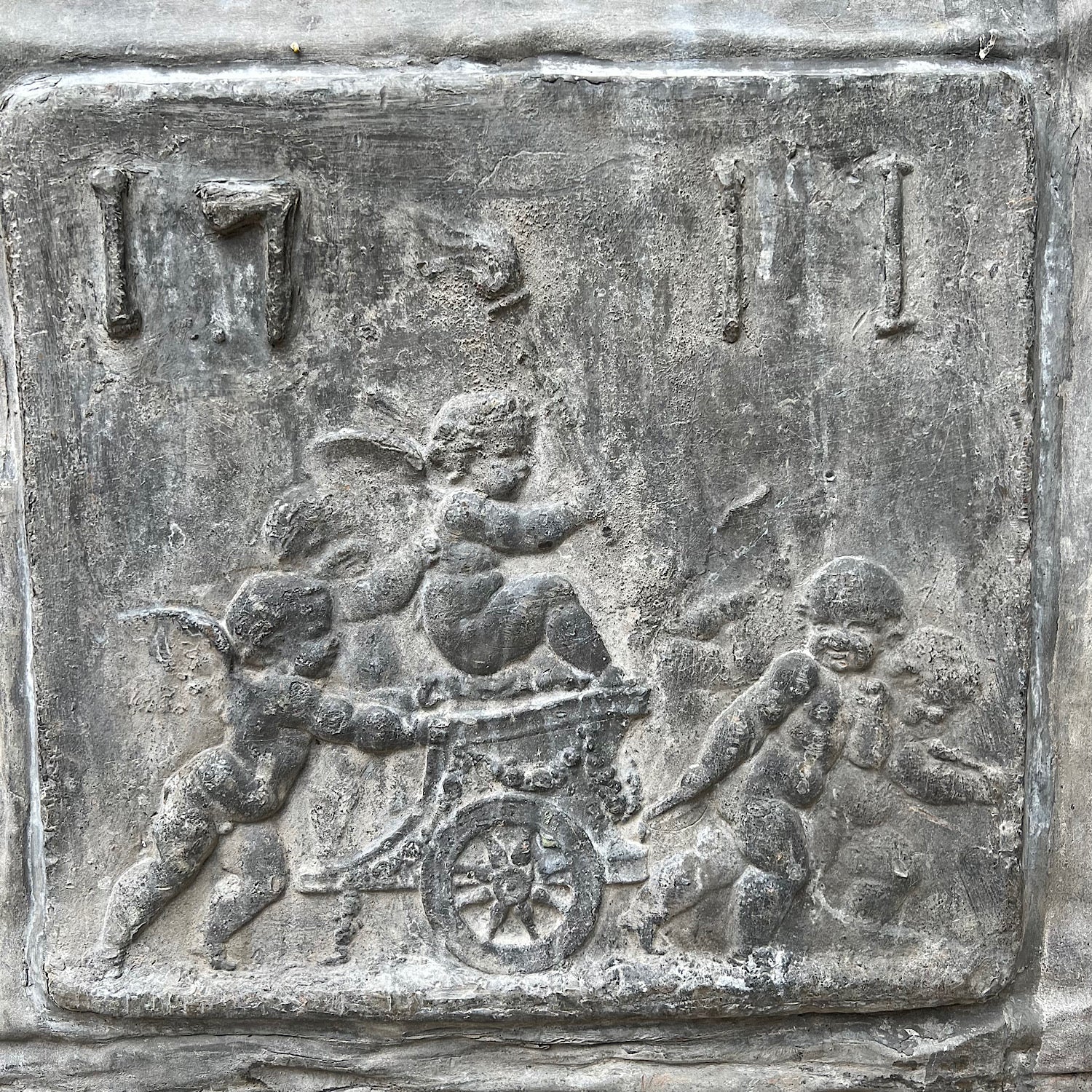
The cistern bears three embellished sides, the front decorated with a frieze with date 1711 alongside dancing and frolicking Cherubs riding a small chariot. The front and sides are each punctuated by four rose motifs. The Classical representation of dancing Cherubs can be found in art and architecture from the Roman period through to Renaissance Europe and on to Georgian England.
This wonderful early piece would make a stunning planter with a capacity for larger shrubs as well as flowers. Alternatively this would make the most wonderful water feature, turned into a small pond or fountain.
Product Information
Product Information
Shipping & Returns
Shipping & Returns


Rare Queen Anne Lead Cistern with Cherubs 1711
Rare Queen Anne Lead Cistern with Cherubs 1711
An exquisite rare Queen Anne (1665-1714) Lead Cistern dated 1711.
The cistern bears three embellished sides, the front decorated with a frieze with date 1711 alongside dancing and frolicking Cherubs riding a small chariot. The front and sides are each punctuated by four rose motifs. The Classical representation of dancing Cherubs can be found in art and architecture from the Roman period through to Renaissance Europe and on to Georgian England.
This wonderful early piece would make a stunning planter with a capacity for larger shrubs as well as flowers. Alternatively this would make the most wonderful water feature, turned into a small pond or fountain.
Product Information
Product Information
Shipping & Returns
Shipping & Returns
Description
An exquisite rare Queen Anne (1665-1714) Lead Cistern dated 1711.
The cistern bears three embellished sides, the front decorated with a frieze with date 1711 alongside dancing and frolicking Cherubs riding a small chariot. The front and sides are each punctuated by four rose motifs. The Classical representation of dancing Cherubs can be found in art and architecture from the Roman period through to Renaissance Europe and on to Georgian England.
This wonderful early piece would make a stunning planter with a capacity for larger shrubs as well as flowers. Alternatively this would make the most wonderful water feature, turned into a small pond or fountain.